
Disclaimer: The ECG patch shown in this article represents the FibriArt product design intended for the Indian subcontinent. Product design, specifications, and availability may vary across different regions.
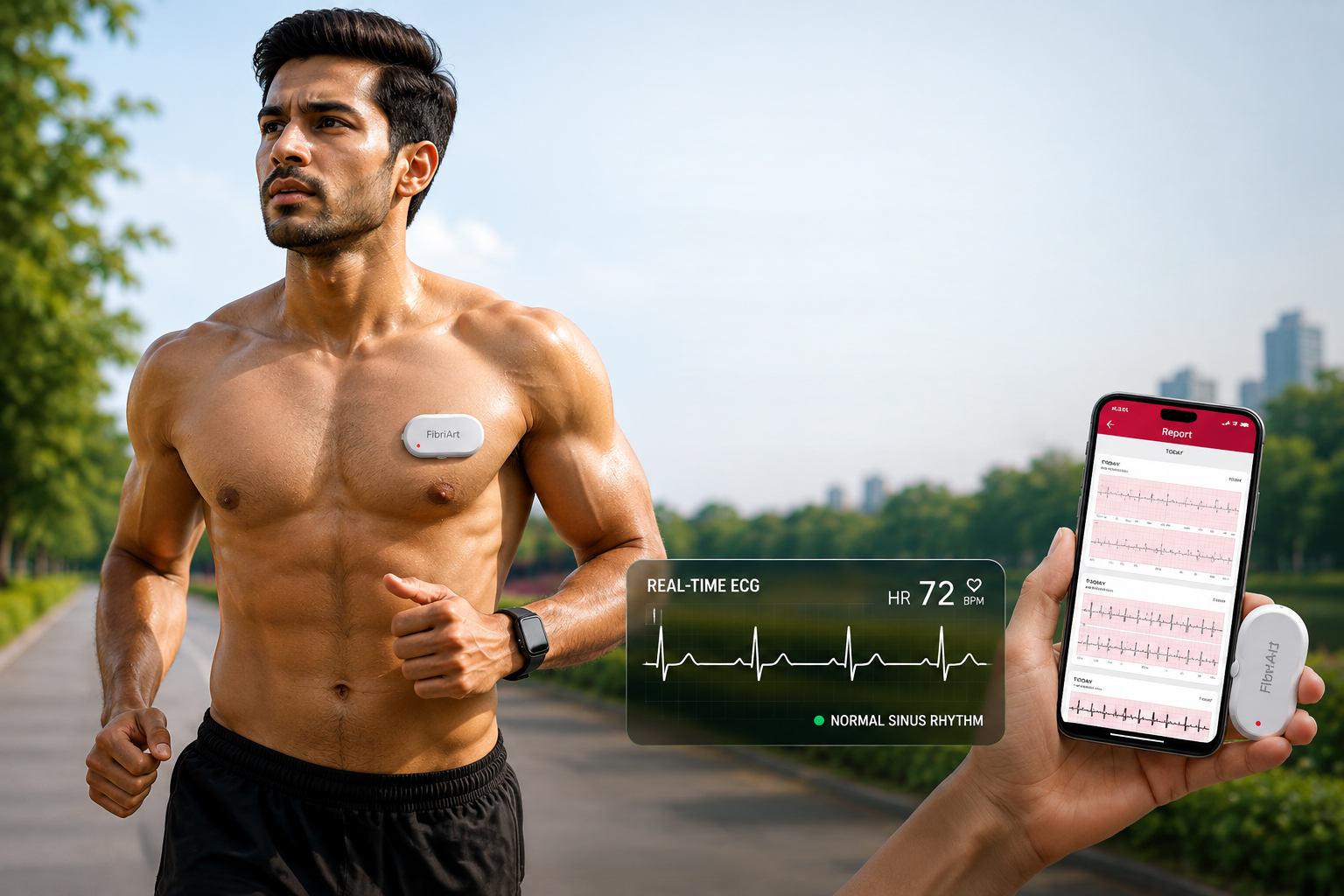
Fitness tracking has moved beyond counting steps, calories, and heart rate. Wearable ECG devices add another layer of information by recording the heart’s electrical activity, helping users understand their heart rhythm during everyday activity and, in some cases, around exercise. This can be particularly relevant for people who experience palpitations or have a known rhythm disorder, although wearable readings should not be treated as a diagnosis.
This article looks at how an ECG wearable device fits into fitness and heart monitoring, how it differs from conventional heart-rate tracking, and where it can provide useful insight. It also examines the challenges of recording ECG during movement, the role of wearable monitoring in cardiac rehabilitation, and why a wearable ECG monitor cannot replace clinical testing such as a 12-lead ECG or Holter monitoring. Understanding these differences can help users make better-informed decisions about fitness technology and heart health while staying clinically appropriate.
What Is a Wearable ECG Device?
An electrocardiogram (ECG) records the electrical activity of the heart. A wearable ECG device uses sensors that come into contact with the body to capture this electrical signal and produce an ECG recording.
Unlike a standard 12-lead ECG performed in a clinical setting, many consumer ECG wearable devices provide a single-lead ECG or limited-lead recording. This makes them useful for capturing certain rhythm information, particularly when symptoms occur, but they do not provide the same assessment as a complete clinical ECG.
Some wearables combine ECG capabilities with optical heart-rate monitoring, activity tracking and other health measurements. This allows users to view cardiovascular information alongside their exercise and daily activity data.
How Is ECG Monitoring Different From Heart-Rate Tracking?
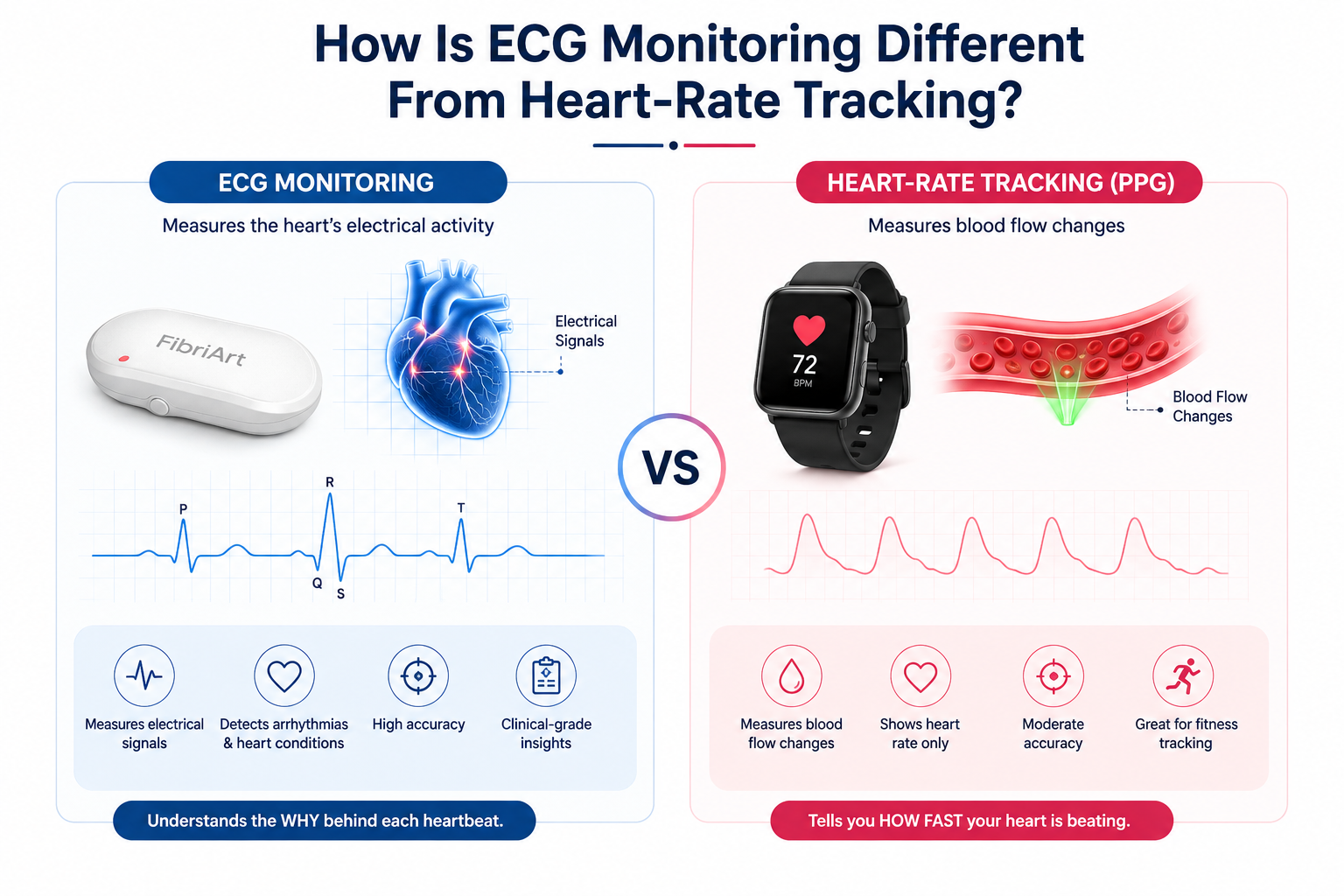
Heart-rate monitoring and ECG monitoring provide different types of information.
A typical optical heart-rate sensor uses photoplethysmography (PPG) to estimate pulse rate from changes in blood flow. ECG, in contrast, measures the heart's electrical activity.
| Feature | Heart-rate monitoring | Wearable ECG |
|---|---|---|
| Measures | Pulse/heart rate | Electrical activity of the heart |
| Common technology | PPG | Electrical sensors |
| Main use | Tracking heart rate and trends | Recording heart rhythm |
| Rhythm information | Limited | More detailed |
| AFib detection | Available on some devices | Available on some devices |
| Clinical diagnosis | No | No, by itself |
This distinction matters during fitness activities. A heart-rate reading can show how quickly the heart is beating, while an ECG recording may provide additional information about the rhythm.
The American College of Cardiology notes that some consumer devices combine PPG-based monitoring with on-demand single-lead ECG capabilities, while also emphasizing their limitations compared with medical-grade monitoring.
Why Does Heart Monitoring Matter During Exercise?
During exercise, the cardiovascular system works harder to deliver oxygen to working muscles. Heart rate normally increases as exercise intensity rises, and it gradually falls during recovery.
For most people, monitoring heart rate can be a useful way to understand exercise intensity. However, people who experience palpitations, unusual heartbeat sensations or known rhythm problems may have additional reasons to monitor their heart.
This is where a cardiac monitor with ECG capabilities can provide another source of information. If symptoms occur during or shortly after activity, an ECG recording may help document what the heart rhythm looked like at that particular time.
That information can be useful when discussing recurring symptoms with a healthcare professional, although it should not be interpreted as a diagnosis without appropriate clinical assessment.
How Can Wearable ECG Devices Support Fitness?
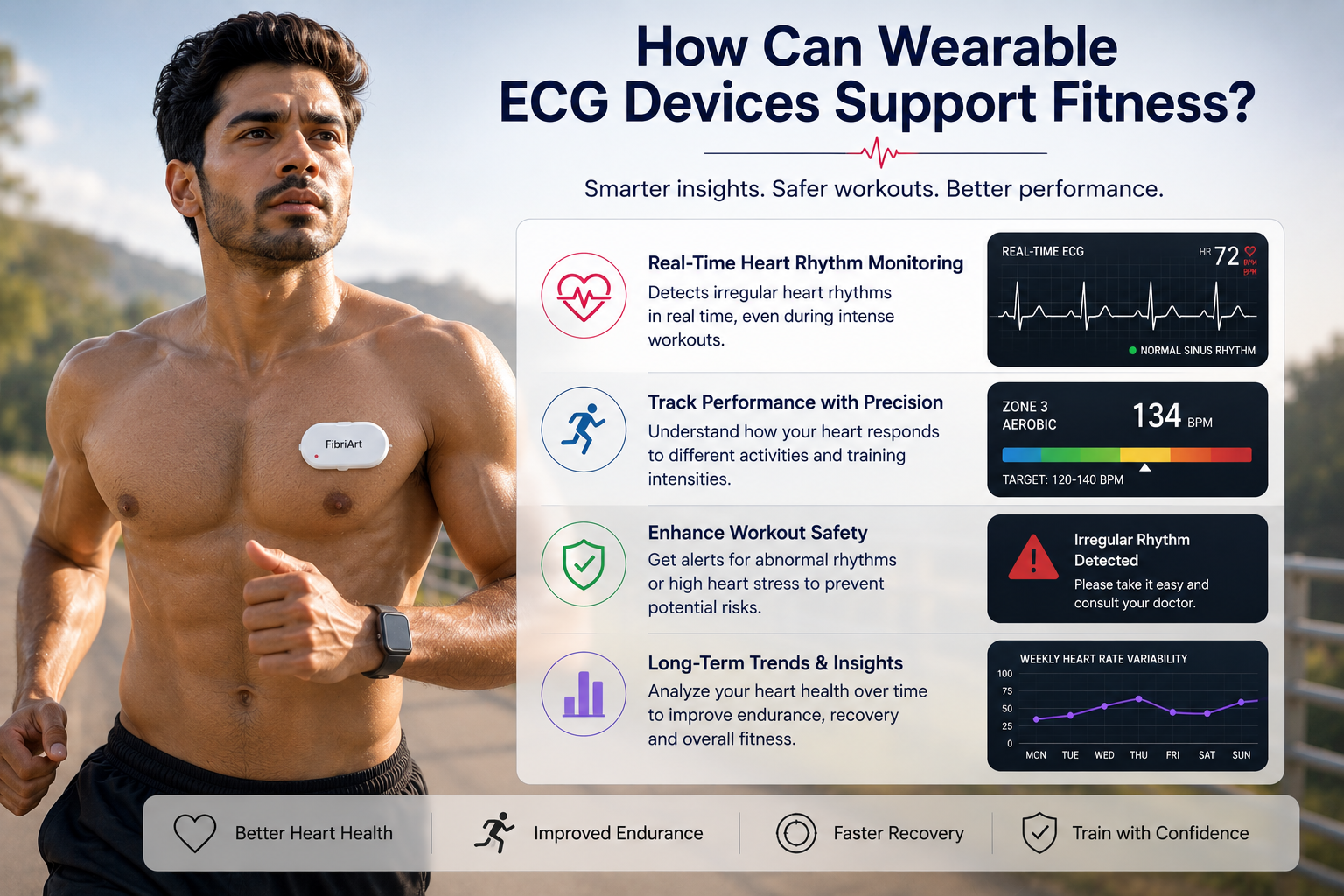
Understanding Heart Rhythm During Workouts
Fitness technology increasingly provides more than basic activity measurements. An ECG wearable device can add heart-rhythm information to conventional workout data, particularly when a user records an ECG around the time of symptoms.
For someone who occasionally experiences palpitations, being able to capture a recording may provide useful information that would otherwise be difficult to document during a short clinical appointment.
Identifying Irregular Rhythm Patterns
Some wearable ECG systems can identify patterns that may be consistent with atrial fibrillation (AFib). Research reviewed by the ACC shows that consumer wearable technologies can perform well for AF detection in selected circumstances, but abnormal or inconclusive results still require appropriate medical evaluation.
Supporting Consistent Physical Activity
The value of wearable technology is not limited to ECG recordings. A 2026 American Heart Association review of 14 clinical trials involving more than 1,000 adults with cardiovascular disease found that people using smartphone apps and fitness trackers walked nearly 1,100 additional steps per day and completed about four more minutes of moderate-to-vigorous physical activity daily than those who did not use these technologies.
This suggests that wearable technology can support healthier activity habits, although longer-term research is still needed.
Can Wearable ECG Devices Detect Arrhythmias During Exercise?
In some cases, wearable ECG technology can capture an abnormal rhythm when a person records an ECG during symptoms. However, exercise presents a technical challenge: movement can interfere with the quality of the electrical signal.
Running, cycling, strength training and other activities can create movement and muscle-related interference. Sweat, changes in skin contact and sensor positioning can also affect a recording.
For this reason, a wearable ECG monitor should not be assumed to produce a clinically interpretable recording during every workout. The quality of the signal depends on the device, sensor design, body position, activity and recording conditions.
A wearable may therefore be useful as part of broader heart-rhythm monitoring, but its readings need to be considered within the limitations of the technology.
Are Wearable ECG Devices Accurate During Exercise?
Wearable ECG devices can provide useful heart-rhythm information, but accuracy is not identical across all devices or exercise conditions.
The ACC has reported research showing that commercially available wearable heart-rate monitors can differ meaningfully from ECG-derived heart rates during exercise, with differences becoming more pronounced in participants with atrial fibrillation.
Factors that can influence wearable monitoring include:
- Body movement
- Poor sensor or electrode contact
- Sweat
- Device positioning
- Muscle activity
- Exercise intensity
- Signal-processing algorithms
Therefore, users should look at wearable readings as one source of information rather than assuming that every reading has the same clinical significance as a hospital ECG.
Wearable ECG vs Traditional ECG Monitoring
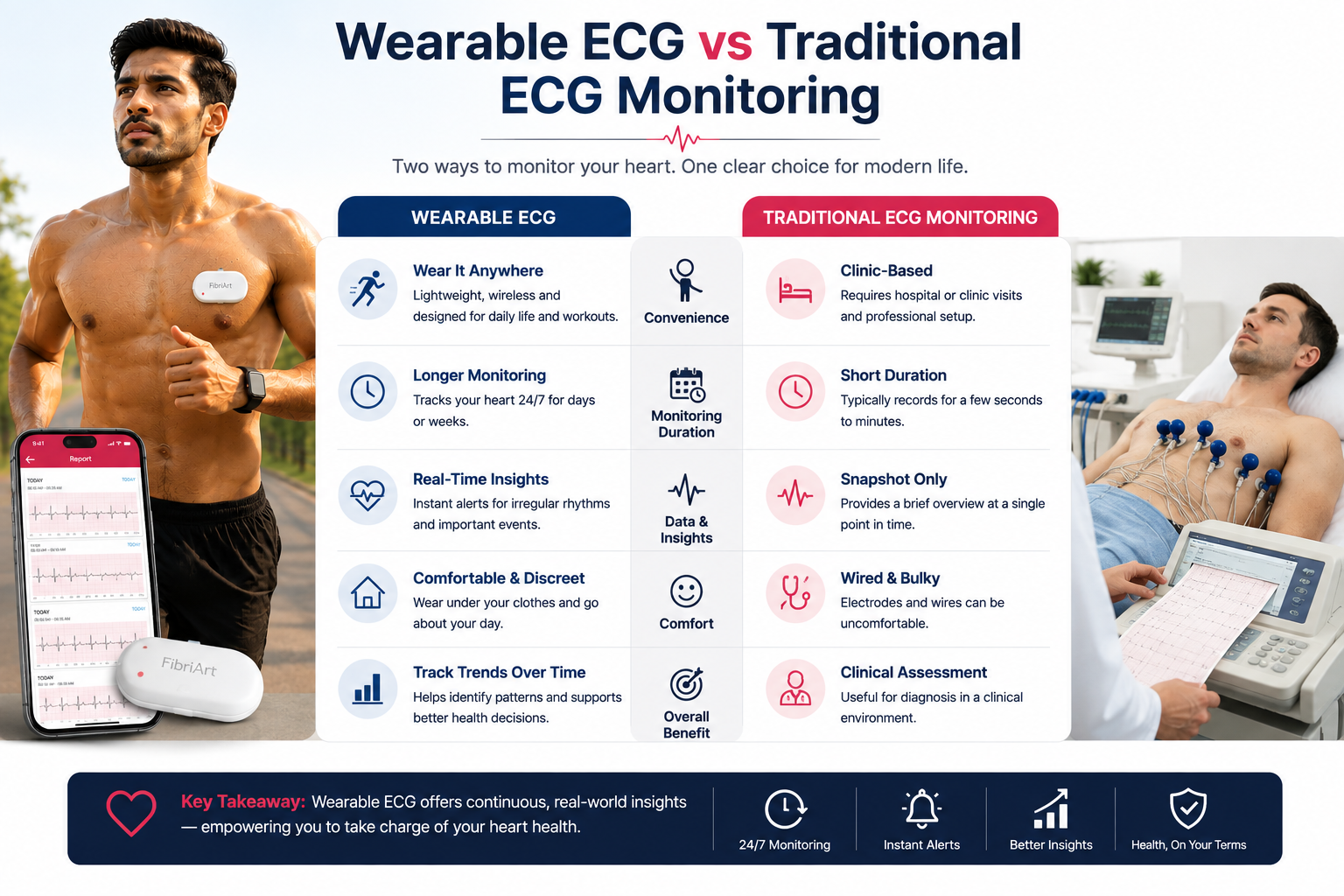
Different cardiac monitoring technologies serve different purposes.
| Monitoring technology | Typical use | Monitoring pattern |
|---|---|---|
| ECG wearable device | Spot rhythm recording | Intermittent |
| Wearable ECG monitor | Rhythm monitoring and selected recordings | Intermittent or device-dependent |
| ECG patch | Extended rhythm monitoring | Often continuous |
| Holter monitor | Ambulatory rhythm assessment | Usually extended |
| Mobile cardiac telemetry | Remote clinical rhythm monitoring | Extended |
| 12-lead ECG | Clinical cardiac assessment | Short recording |
A consumer wearable is therefore not simply a smaller version of a hospital ECG. The appropriate cardiac monitor depends on the symptoms, suspected condition and monitoring objective.
The ACC highlights several limitations of consumer wearables compared with medical-grade monitoring, including charging-related monitoring gaps and reduced sensitivity for some intermittent arrhythmias.
Can People With Heart Disease Use Wearable ECG Devices for Fitness?
People with cardiovascular conditions may use wearable technology as part of their activity and health-management routine, but exercise recommendations should be individualized.
The European Society of Cardiology's sports cardiology guidance emphasizes assessment and shared decision-making when advising people with cardiovascular disease about exercise and sports participation.
For someone with a diagnosed heart condition, a wearable ECG monitor may complement—not replace—the monitoring and exercise plan recommended by their healthcare team.
This distinction is especially important for people with conditions such as atrial fibrillation, coronary artery disease or other rhythm disorders.
The Role of Wearables in Cardiac Rehabilitation
Wearable technology is also becoming relevant to cardiac rehabilitation. The American Heart Association identifies wearable devices, mobile applications and other digital technologies as tools that can help augment traditional cardiac rehabilitation programs.
A wearable can support activity tracking, patient engagement and remote follow-up, depending on the rehabilitation program and technology being used.
For people who face barriers such as travel distance, scheduling or access to center-based programs, digital technologies may provide additional ways to support cardiovascular health. The AHA notes, however, that these technologies need appropriate validation and implementation within clinical care.
What Are the Limitations of Wearable ECG Devices?
Wearable ECG technology has clear potential, but it also has limitations.
First, many consumer devices capture only a single-lead ECG rather than the multi-lead assessment available in clinical settings. Second, wearables may not be worn continuously, particularly when they need to be removed for charging. Third, movement and poor contact can produce inconclusive or unreliable recordings.
False-positive alerts are another consideration. The ACC notes that consumer devices can produce false positives, particularly when used in populations with a low likelihood of arrhythmia.
Most importantly, the FDA states that wearable technologies capable of detecting heart-rate or rhythm abnormalities are not intended to provide a diagnosis. Abnormal findings may instead prompt a person to seek appropriate medical evaluation.
Can a Wearable ECG Replace a Holter Monitor?
No. A wearable ECG and a Holter monitor have different roles.
A consumer wearable may be convenient for intermittent recordings and everyday monitoring. A Holter monitor, by contrast, is a medical monitoring system designed for extended ECG recording and clinical evaluation.
The right choice depends on what a healthcare professional is trying to investigate. For recurring symptoms or suspected intermittent arrhythmias, a clinician may recommend a Holter monitor, ECG patch, mobile cardiac telemetry or another form of ambulatory monitoring.
The important point is that convenience does not make a consumer wearable equivalent to clinical cardiac monitoring.
How Should You Use a Wearable ECG During Fitness Activities?
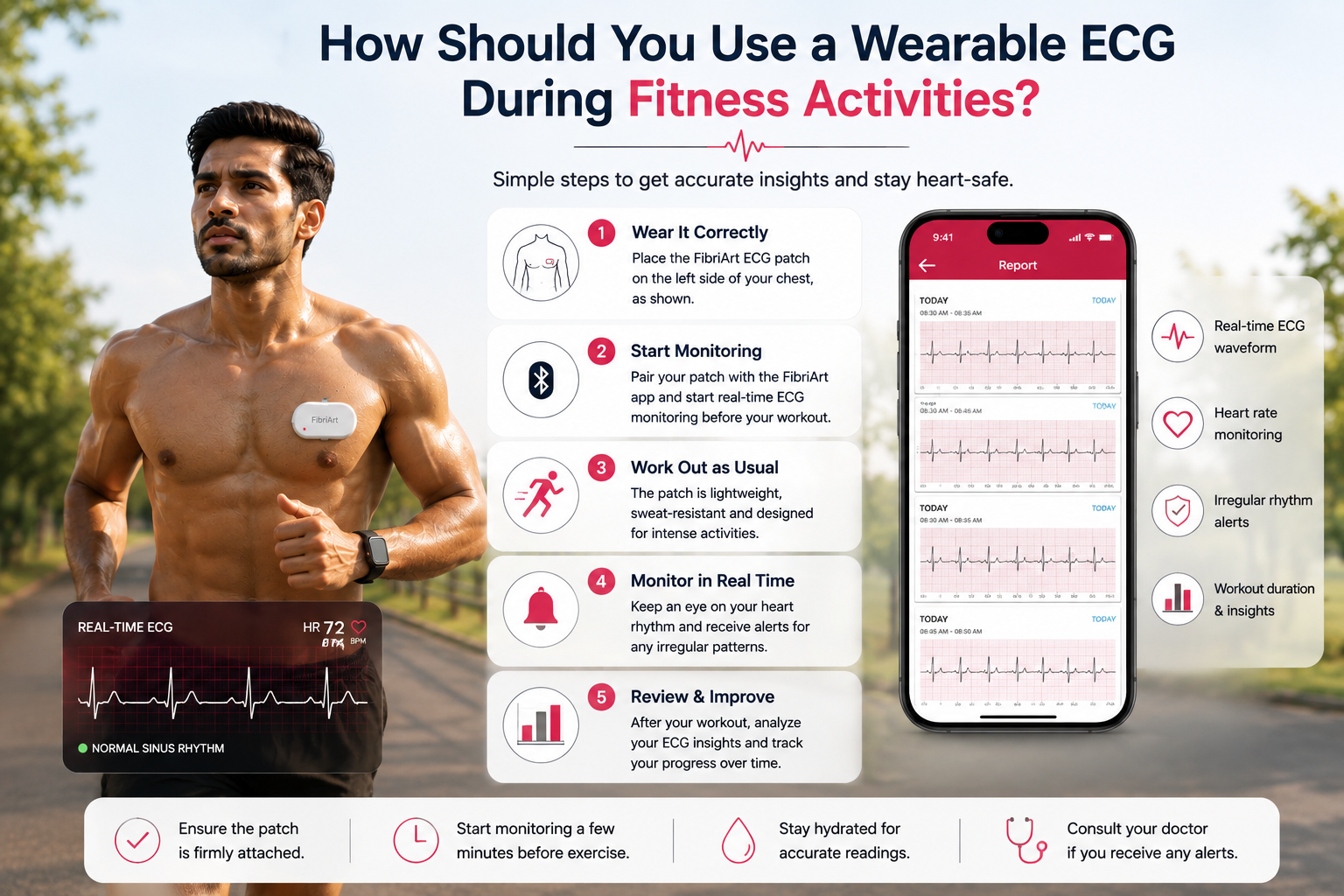
Before using an ECG wearable for exercise, understand what the device measures and how its sensors should be positioned.
During workouts, remember that movement can affect readings. Rather than focusing on a single number, consider patterns, symptoms and the quality of the recording.
If a wearable produces repeated abnormal rhythm notifications or you experience symptoms such as palpitations, dizziness, fainting, chest discomfort or unusual shortness of breath, discuss them with a healthcare professional.
A wearable ECG can provide useful information, but it should support—not replace—professional medical evaluation.
Frequently Asked Questions About Wearable ECG Devices and Fitness
They can record heart rhythm in certain situations, but movement can affect signal quality. The capabilities and recording method vary between devices.
They can provide useful information, but exercise-related movement, sweat, sensor contact and device design can affect recording quality.
Some ECG-enabled wearables can identify rhythms that may be consistent with AFib. A healthcare professional should evaluate concerning results rather than treating a wearable notification as a diagnosis.
No. A Holter monitor is a clinical ambulatory ECG system designed for extended monitoring. A consumer wearable serves a different purpose.
Some people with cardiovascular conditions may use wearable technology as part of their activity or monitoring routine. Exercise and monitoring plans should be based on individual medical circumstances and professional advice.
The “best” wearable ECG monitor depends on the intended use. Consider the type of ECG recording, monitoring duration, sensor design, signal quality, ease of use and whether the device fits the guidance of your healthcare professional.
References
- American Heart Association — Wearable Trackers and Physical Activity in People With Heart Disease
- American Heart Association — Digital Technologies in Cardiac Rehabilitation
- American College of Cardiology — Smartwatches and Atrial Fibrillation
- American College of Cardiology — Accuracy of Wearable Heart Rate Monitors
- U.S. FDA — Post-Market Evaluation of Smartwatch Cardiovascular Notifications
- European Society of Cardiology — Sports Cardiology and Exercise in Patients With Cardiovascular Disease
Recent Posts



Limitations of Traditional Cardiac Monitoring Devices
March 25, 2026
How Fibriart-I ECG Patch Fits Into Your Clinic Workflow
March 11, 2026

Common Cardiac Rhythm Disorders and How They Often Go Undetected
February 05, 2026




The Future of Heart Health: How Wearable Heart Monitors Saving Lives
February 20, 2025