The Need for Smarter Cardiac Monitoring in Clinics
In cardiology and general practice clinics, patients frequently present with symptoms suggestive of cardiac rhythm disturbances, yet the ECG recorded during consultation may appear normal.
Symptoms such as:
- palpitations
- unexplained dizziness
- suspected atrial fibrillation (AFib)
- intermittent rhythm irregularities
often occur episodically,making them difficult to capture during a brief clinic visit.
Traditional monitoring approaches like Holter monitoring remain valuable, but they can introduce logistical delays, patient inconvenience, and workflow complexity for clinics.
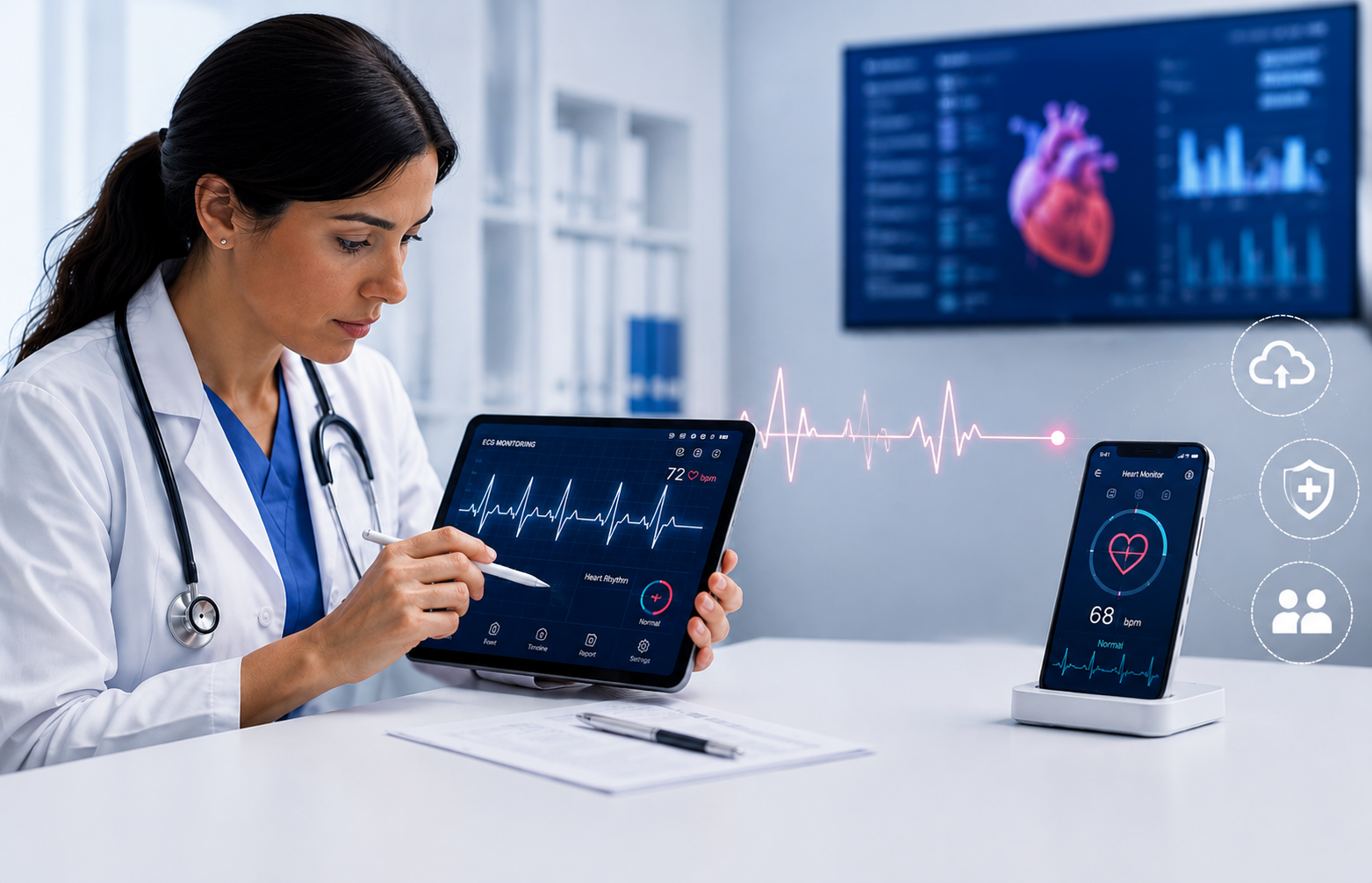
As outpatient cardiac care becomes increasingly digital, clinicians need ECG monitoring tools that are quick to deploy, clinically reliable, and easy to integrate into everyday practice.
Fibriart-I is designed to address this need. The wearable ECG patch system enables clinicians to initiate short-duration ECG recordings during consultation and generate digital reports for clinical review?without disrupting routine clinic workflows.
Understanding the Fibriart-I ECG Patch System
Fibriart-I is built around a simple concept: make ECG monitoring easy to initiate, comfortable for the patient, and efficient for the clinician.
The system consists of three components:
- A compact adhesive ECG patch
- A detachable device module
- The Fibriart mobile application
Together, these components allow clinicians to record ECG data, generate reports, and review patient recordings within a streamlined digital environment.
Wearable ECG Patch
The adhesive ECG patch is designed for ambulatory ECG monitoring, making it suitable for in-clinic assessments or symptom-triggered recordings.
The adhesive layer is splash-resistant, meaning it can tolerate sweat or light moisture during normal activities. However, the electronic device module itself is not designed for immersion in water, so patients are typically advised to remove the device before showering while leaving the adhesive patch in place if necessary.
Detachable Device Module
One of the practical features of the system is the detachable ECG module.
The module connects to the adhesive patch during recording and can be removed afterward. This design enables intermittent monitoring workflows, where the patch remains positioned while the recording device can be reattached when symptoms occur.
This approach supports symptom-triggered ECG capture without repeated patch placement.
Fibriart Mobile Application
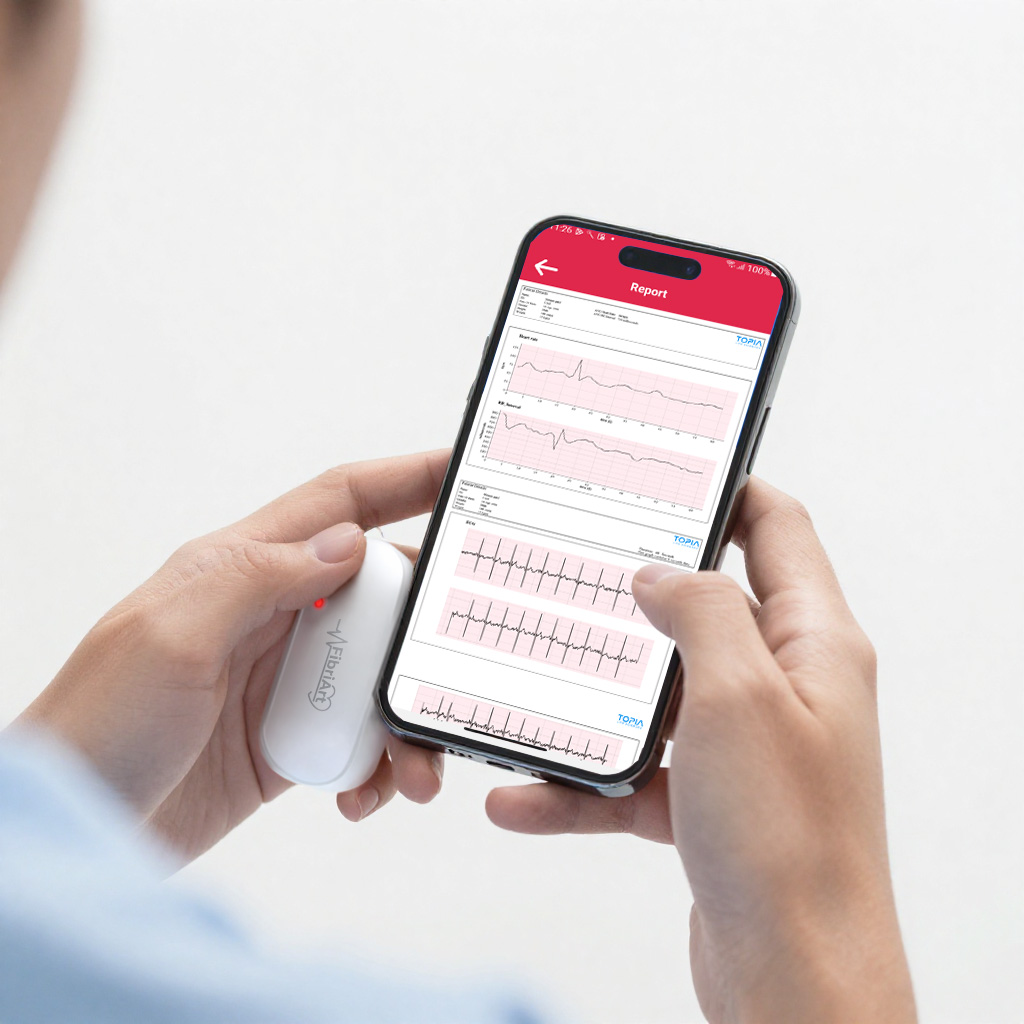
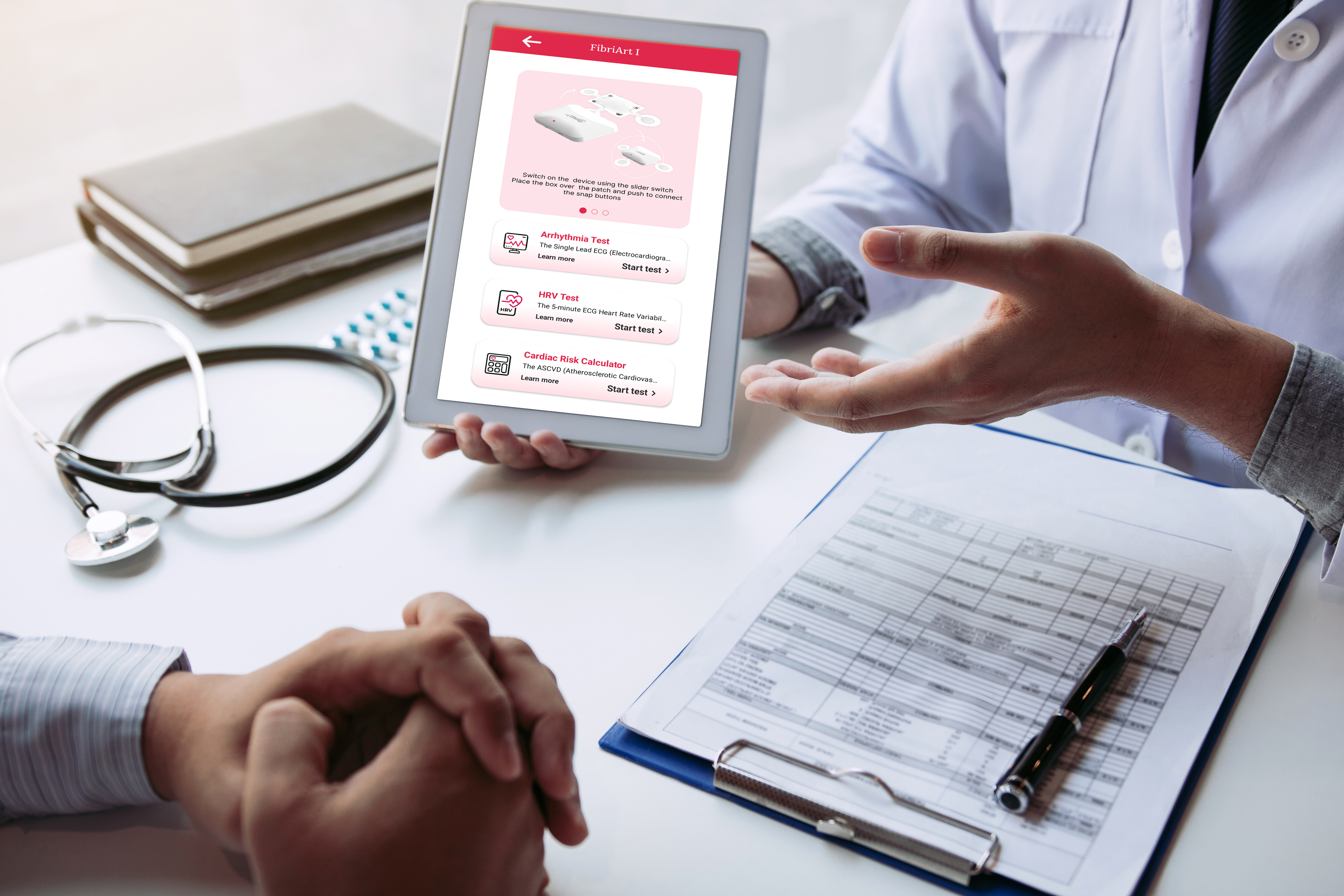
The system operates through the Fibriart mobile application, which acts as the control interface for ECG recording and patient session management.
Clinicians can use the app to:
- create or select a patient profile
- initiate ECG recordings
- save ECG sessions
- generate clinical reports
This digital workflow ensures that ECG data can be accessed and managed efficiently.
How Fibriart-I Fits Into the Clinical Workflow
For physicians and clinical staff, the most important question is not only what a device does, but how easily it integrates into routine clinical operations.
Step 1: Patient Identification
The process begins when a patient presents with symptoms suggestive of a rhythm disturbance.
Common scenarios include:
- palpitations
- suspected arrhythmia
- episodic dizziness or syncope
- AFib suspicion
After clinical evaluation, the physician determines that ECG monitoring is required to capture rhythm activity.
Instead of scheduling external monitoring, the clinician can initiate ECG recording immediately using the wearable patch.
Step 2: Patch Placement in the Clinic
Once monitoring is indicated, the ECG patch is applied to the patient.
Typical clinical steps include:
For Patients
- Preparing the skin surface
- Applying the adhesive ECG patch
- Attaching the device module
- Initiating recording via the mobile application
Within the application, the clinician typically performs two actions:
- Add Patient
- Start Recording
This process can be completed within minutes and fits naturally within a clinical consultation.
Step 3: ECG Recording
Fibriart-I supports configurable recording durations, allowing clinicians to capture ECG data depending on the diagnostic requirement.
Common recording durations include:
- 30 seconds
- 60 seconds
- 90 seconds
- 5 minutes
In most cases, the recording automatically stops once the configured duration is completed.
Patients may perform light activities such as sitting or walking during recording, although vigorous movement should be avoided to reduce motion artifacts and maintain signal quality.
For optimal diagnostic clarity, recordings are typically performed while the patient remains relatively still.
Step 4: Data Capture and Report Generation
After recording, the ECG data is saved through the application.
The workflow generally follows these steps:
- Recording completes
- User selects Save Record
- The system generates a clinical ECG report
Clinicians can then export ECG data in several formats depending on clinical or integration requirements.
Common export formats include:
- PDF clinical report
- CSV raw waveform data
- JSON format for system integration
These formats allow flexibility for both clinical documentation and digital integration.
Step 5: Clinician Review and Data Access
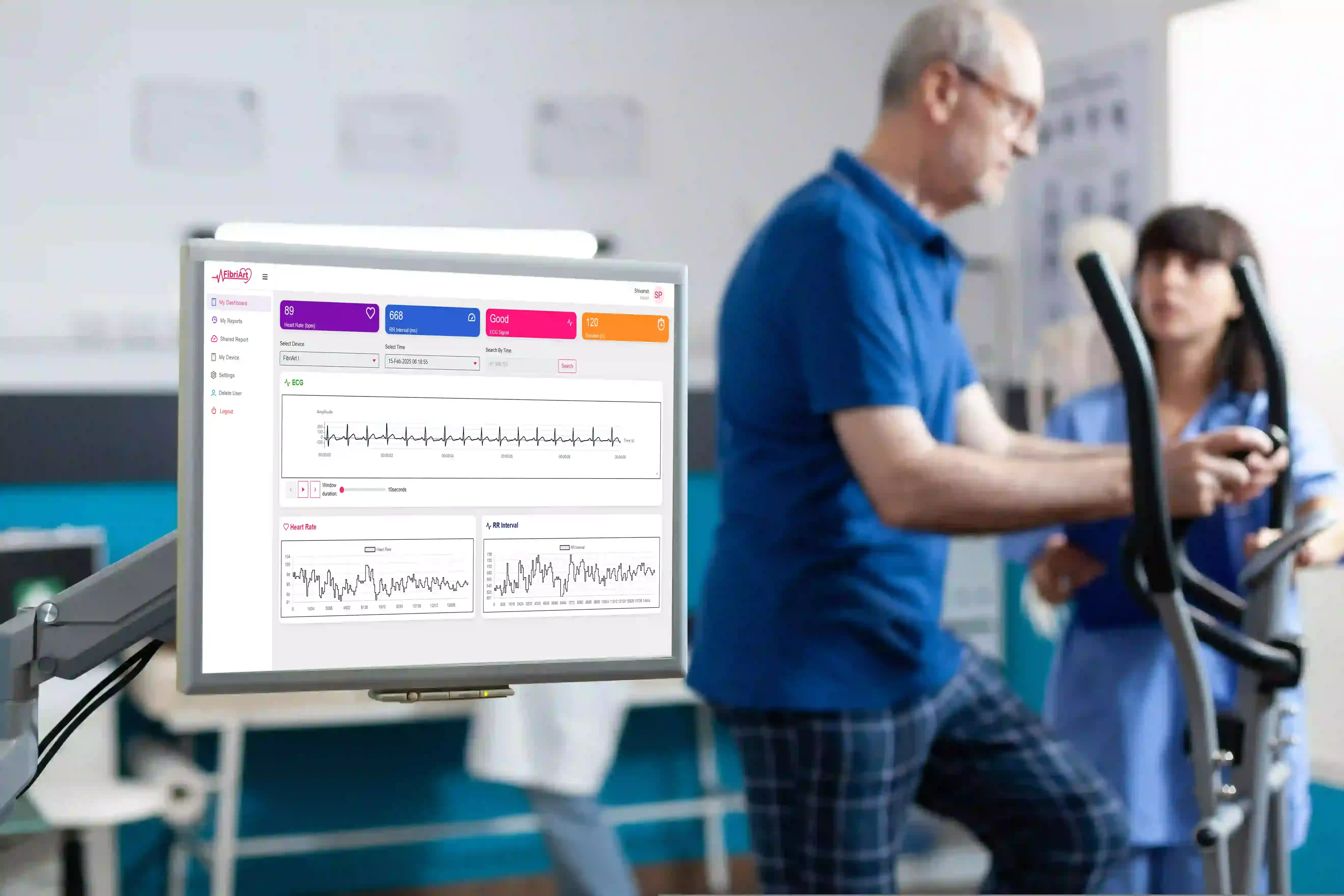
Once the ECG recording is completed, clinicians can review the data through multiple access points.
Available access methods include:
- The Fibriart mobile application
- a secure cloud dashboard
- downloadable ECG reports
Reports can then be:
- reviewed by the attending physician
- shared with consulting cardiologists
- uploaded into the hospital EMR or EHR system
A typical clinical workflow may involve:
- Downloading the ECG PDF report
- Saving it to a secure workstation
- Uploading it into the patient?s electronic record
This ensures the ECG findings are integrated into the patient?s long-term clinical documentation.
Supporting Flexible Patient Monitoring
One of the advantages of the Fibriart-I system is its ability to support intermittent monitoring workflows.
In some cases, patients may experience symptoms that occur unpredictably. Rather than requiring continuous monitoring equipment, Fibriart allows a flexible setup.
For example:
- The adhesive patch can remain on the patient?s body
- The device module can be detached when not needed
- When symptoms occur, the module can be reattached to capture ECG data
As long as electrode conductivity and adhesive integrity are maintained, the system can continue to record diagnostic-quality ECG signals.
This workflow helps clinicians capture symptom-triggered cardiac events without repeated device placement.
Designed for Practical Clinic Use
Medical devices must fit into real-world clinical environments where efficiency, hygiene, and reliability matter.
Fibriart incorporates several practical features to support everyday clinic operations.
Reusable Device Module
The device module is designed to be reused across patients.
However:
- The adhesive ECG patch is single-patient disposable
- The module must be cleaned before reuse
Standard cleaning involves disinfecting the module with 70% isopropyl alcohol (IPA) according to hygiene protocols.
This approach helps clinics maintain infection control while minimizing device costs.
Device Charging
The device module uses a USB-C charging interface.
Important charging considerations include:
- Devices are typically shipped with 30?60% battery charge
- A full charge is recommended before first use
- Charging can be performed using a standard 5V USB power source
This makes charging convenient within clinic environments where USB power sources are widely available.
Data Security and Patient Privacy
Digital healthcare tools must protect sensitive medical data. Fibriart incorporates several cybersecurity safeguards to support data security.
Security measures typically include:
- TLS 1.2 / TLS 1.3 encrypted transmission
- AES-128 encryption for stored data
- Authenticated clinician login
- Role-based access control
- Token-based API access
These protections help ensure that patient ECG data remains confidential during transmission, storage, and clinician access.
Clinicians are also encouraged to follow institutional best practices such as:
- Avoiding unsecured email transfers
- Using encrypted storage devices
- Deleting temporary downloads after uploading to EMR systems
Benefits for Clinics and Healthcare Providers
For clinics, the value of wearable ECG technology lies not only in the device itself but also in how easily it integrates into daily practice.
Fibriart offers several practical benefits:
Quick ECG Recording During Consultation
Clinicians can initiate ECG monitoring directly during patient visits without complex setup procedures.
Digital Report Generation
Automated ECG report generation simplifies documentation and clinical review.
Symptom-Triggered Monitoring
Patients experiencing intermittent symptoms can capture ECG recordings at the moment symptoms occur.
Simple Integration Into Clinic Workflow
The system aligns with typical consultation processes, reducing operational disruption.
Digital Access to ECG Reports
Reports can be reviewed through mobile applications or secure dashboards, enabling easier clinical collaboration.
Supporting Modern Digital Cardiology
Healthcare is rapidly moving toward digital-first diagnostics and remote monitoring solutions.
Wearable medical technologies are playing an increasingly important role in cardiology because they enable:
- Earlier arrhythmia detection
- Improved patient monitoring outside hospitals
- Faster clinical decision-making
Tools like Fibriart-I help bridge the gap between traditional ECG testing and modern digital cardiology workflows.
By enabling quick recordings, flexible monitoring options, and digital report access, clinics can adopt more efficient cardiac monitoring practices.
Conclusion
Modern cardiac care increasingly relies on tools that combine diagnostic accuracy, patient comfort, and workflow efficiency.
Fibriart-I is designed with these principles in mind.
By integrating a wearable ECG patch, mobile application, and digital reporting tools, the system allows clinicians to:
- Initiate ECG monitoring quickly
- Capture symptom-triggered recordings
- Generate and review clinical reports efficiently
Most importantly, it integrates smoothly into existing clinic workflows, helping healthcare providers deliver more responsive and efficient cardiac monitoring.
Frequently Asked Questions (FAQs)
- The recommended wear duration depends on skin tolerance, adhesive strength, and signal quality. For intermittent symptom-triggered monitoring, the patch may typically be worn for up to 24 hours, provided the skin remains irritation-free and the adhesive maintains proper contact.
-Yes. Patients can perform light activities such as sitting or walking while recording ECG data. However, vigorous physical movement or stretching that may loosen the electrodes should be avoided to maintain signal quality.
- After the ECG recording is completed and saved through the mobile app, a PDF report can be generated and shared. Reports may be accessed through the Fibriart mobile app or a secure cloud dashboard, allowing clinicians to review patient ECG data efficiently..
- Yes. The ECG patch is designed for single-patient use, while the device module can be reused across patients. Before reuse, the module should be cleaned using an approved disinfectant such as 70% isopropyl alcohol (IPA) according to hygiene practices.
- Yes. ECG reports can be downloaded from the app or cloud dashboard and uploaded to the clinic?s EMR/EHR system. The typical workflow involves downloading the report, saving it to a secure workstation, and attaching it to the patient?s digital medical record..
Recent Posts



Limitations of Traditional Cardiac Monitoring Devices
March 25, 2026
How Fibriart-I ECG Patch Fits Into Your Clinic Workflow
March 11, 2026

Common Cardiac Rhythm Disorders and How They Often Go Undetected
February 05, 2026



The Future of Heart Health: How Wearable Heart Monitors Saving Lives
February 20, 2025