
An ECG report is only useful if healthcare professionals can trust its accuracy.
As cardiac monitoring devices become more portable and accessible, clinicians are paying closer attention to one critical factor: clinical validation. Whether it’s a wearable ECG monitor used at home or an ECG monitoring system reviewed inside a clinic, doctors need confidence that the device can capture clinically reliable heart data.
This becomes even more important when monitoring irregular heart rhythms like arrhythmia or AFib, where even small inconsistencies in ECG readings can affect diagnosis and treatment decisions.
That’s why healthcare professionals don’t just look at features or portability. They look for cardiac monitoring devices that deliver reliable ECG accuracy, dependable arrhythmia detection, and consistent performance in real-world use.
As wearable cardiac monitoring devices continue growing in India, clinically validated and easy-to-use solutions like FibriArt-I are helping make ECG monitoring more flexible, accessible, and practical for both physicians and users.
Why Clinical Validation Matters in ECG Monitoring Devices
Modern ECG monitoring devices are designed to make cardiac monitoring faster and more accessible. But for healthcare professionals, convenience alone is never enough.
Before relying on any wearable ECG monitor, physicians need to know whether the device can consistently capture stable and clinically reliable ECG readings during real-world use.
This is especially important in cases where patients experience:
- occasional palpitations,
- dizziness,
- chest discomfort,
- or intermittent irregular heartbeats.
Symptoms like these may not appear during a short clinic ECG. Portable and wearable cardiac monitoring devices help bridge this gap by allowing ECG recordings whenever symptoms occur.
However, if the ECG data is inaccurate or inconsistent, it can affect clinical interpretation. This is exactly why clinical validation plays such an important role in modern cardiac monitoring systems.
ECG Accuracy
For physicians, ECG accuracy is one of the most important factors in any cardiac monitoring device.
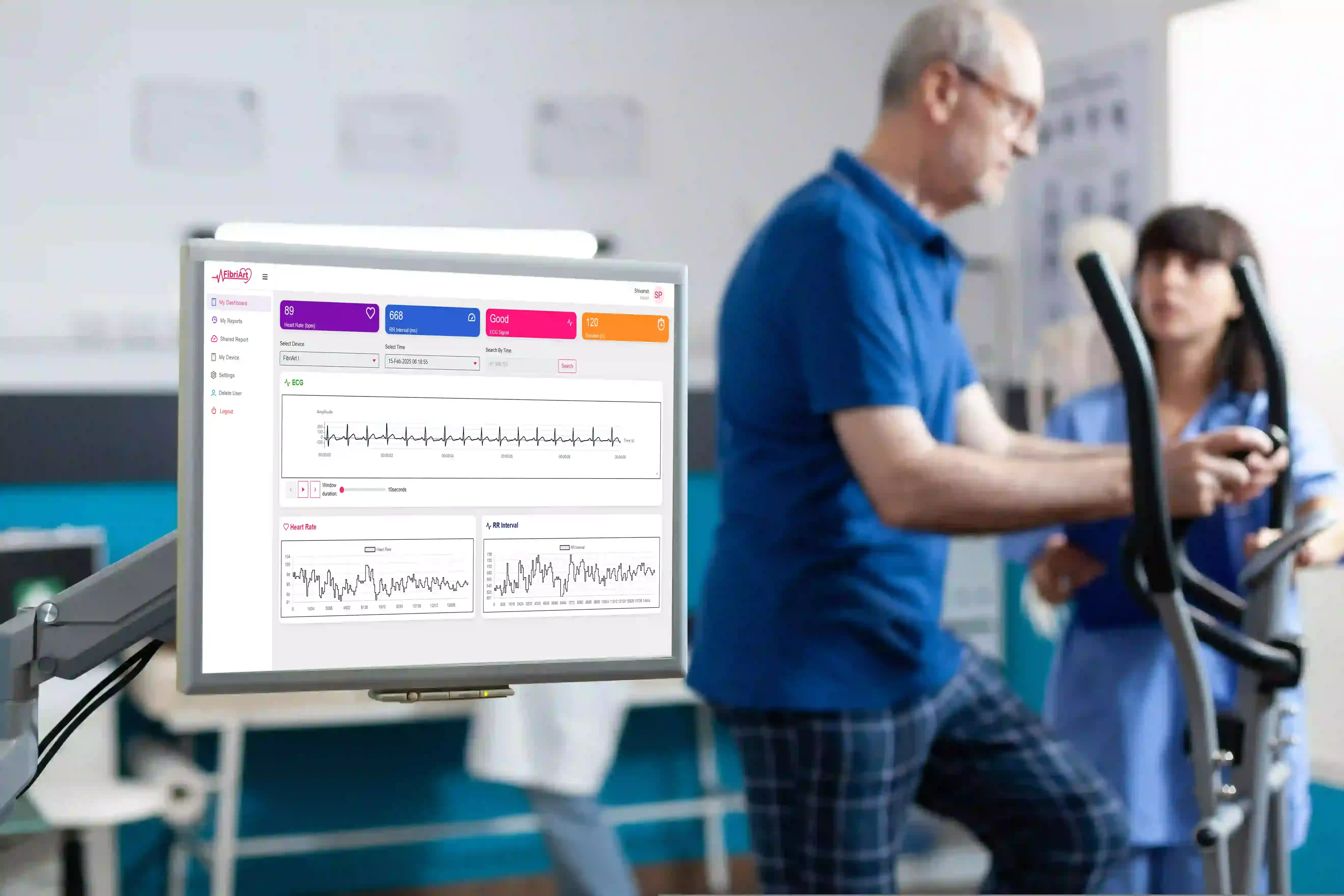
A wearable ECG monitor should capture clear heart signals without excessive noise or interruptions. Reliable ECG readings help clinicians assess cardiac activity more confidently and support better diagnosis.
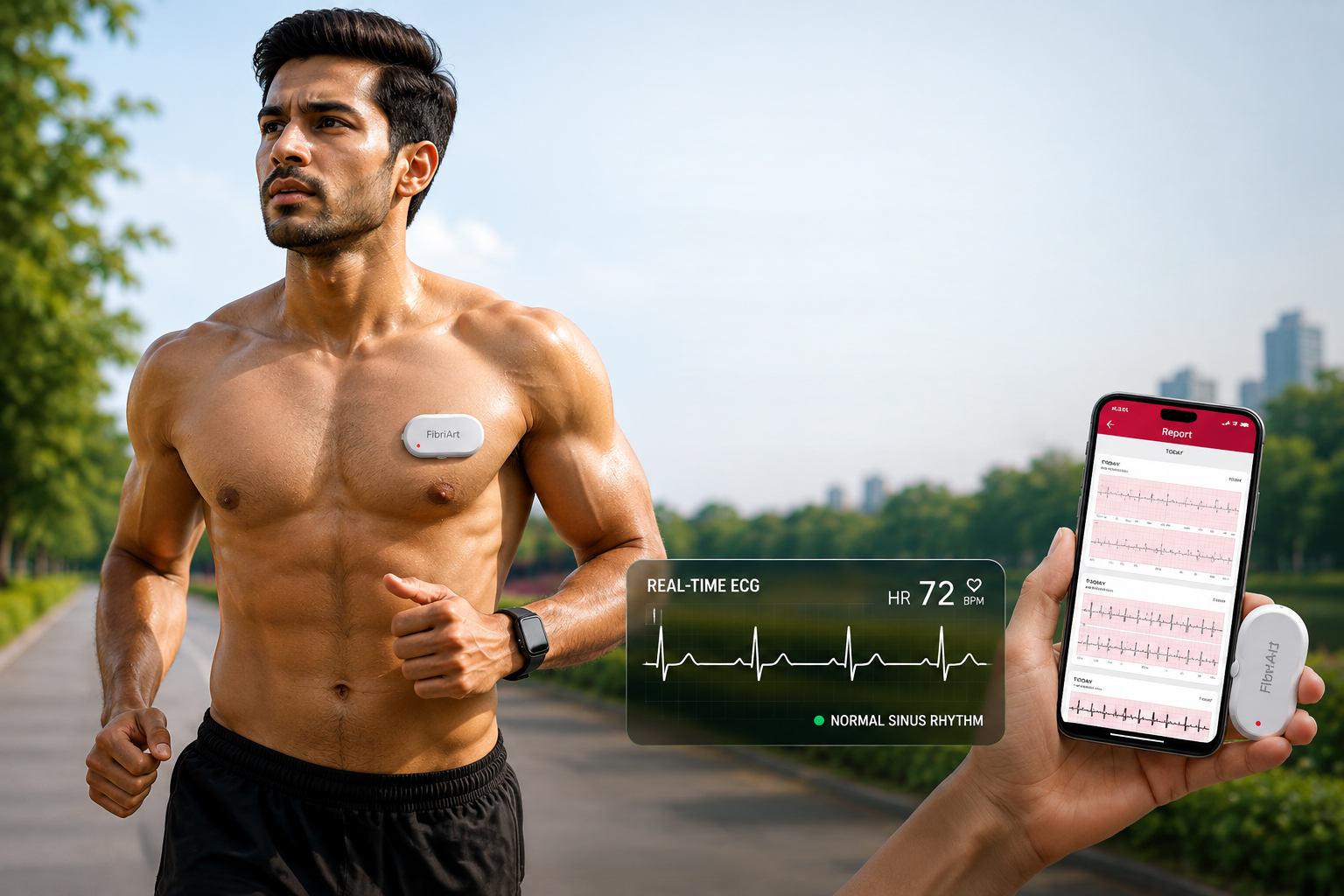
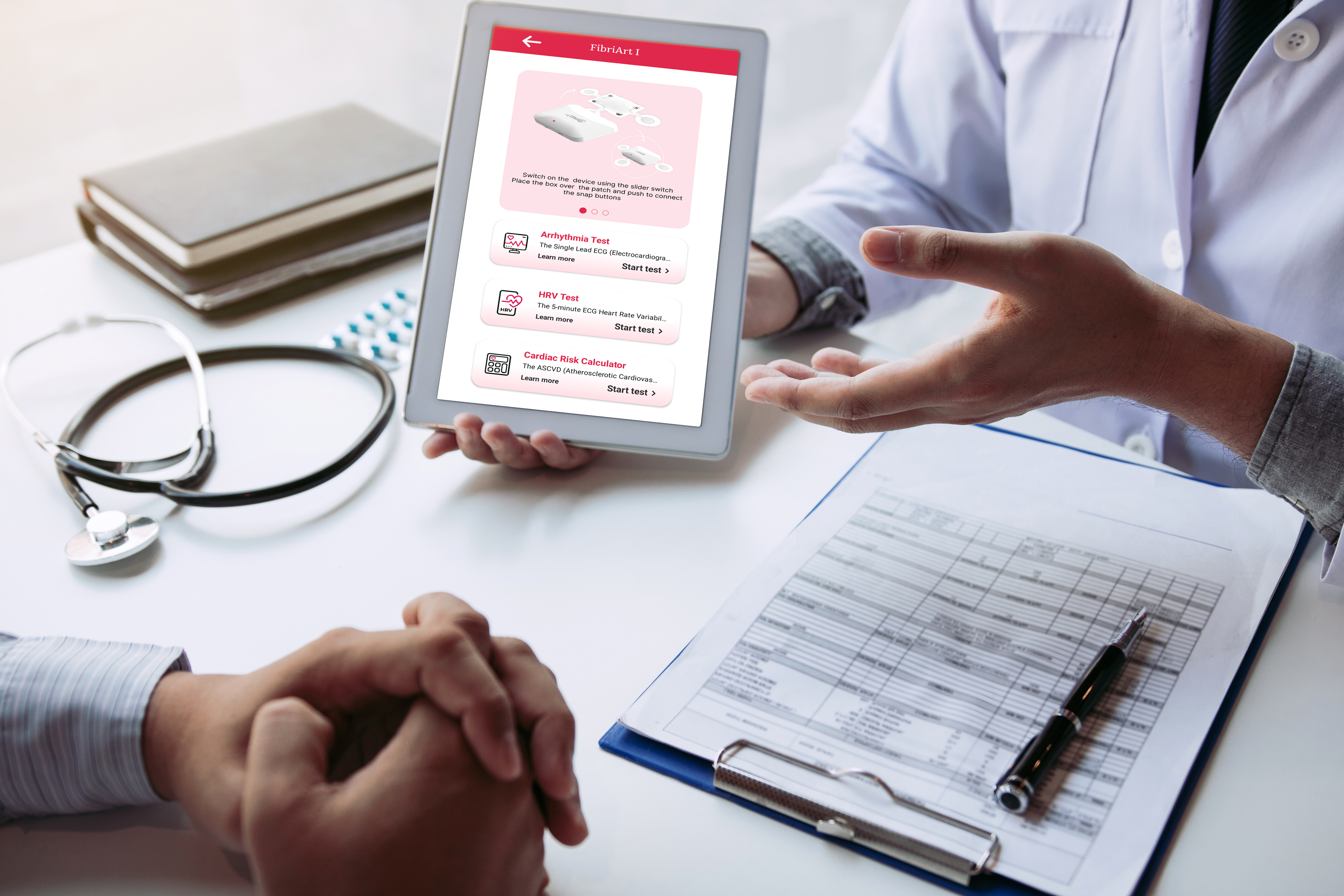
Devices like FibriArt I are designed to make ECG monitoring simpler while still supporting reliable cardiac data collection in everyday environments.
Quick and Reliable Arrhythmia Detection
One of the biggest advantages of wearable ECG monitoring is the ability to capture ECG readings during symptoms instead of waiting for a hospital appointment.
This can help support early arrhythmia detection, especially for users experiencing occasional or unpredictable symptoms.
Clinicians generally prefer ECG monitoring systems that provide:
- stable ECG recordings,
- quick access to reports,
- and repeatable monitoring whenever needed.
Because wearable ECG devices can be used multiple times, users can capture readings across different situations and share them with healthcare professionals for review.
Easy and Repeatable Monitoring
Traditional ECG testing is often limited to hospitals or scheduled appointments. Portable cardiac monitoring devices make the process more flexible.
This is one of the reasons wearable ECG monitoring devices are becoming increasingly popular among both healthcare providers and users looking for practical heart monitoring solutions.
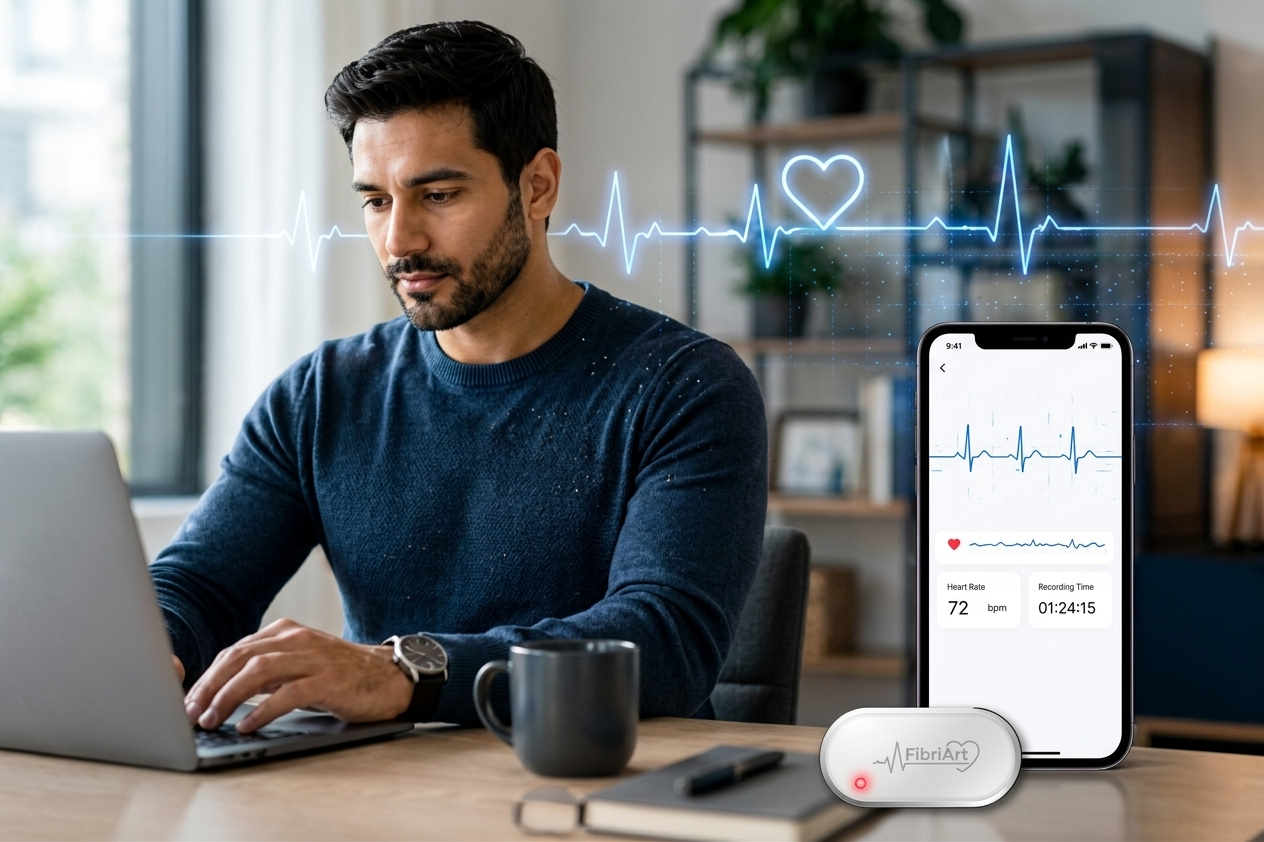
With systems like FibriArt I, users can record ECG readings during daily routines without depending entirely on hospital-based monitoring setups.
This flexibility makes wearable ECG technology useful for:
- symptom-based monitoring,
- preventive heart health checks,
- follow-up observations,
- and repeat ECG recording when needed.
Why Wearable ECG Monitoring Is Growing in India
The demand for wearable cardiac monitoring devices is increasing rapidly across India.
More people are becoming aware of preventive healthcare and looking for:
- wearable ECG monitors,
- home cardiac monitor solutions,
- ECG patch monitoring devices,
- and portable heart monitoring technology.
At the same time, healthcare providers are adopting wireless ECG monitoring systems to improve accessibility and support faster cardiac assessment outside traditional clinical settings.
The growth of digital healthcare in India is also encouraging the use of connected cardiac monitoring devices that allow users to monitor heart activity more conveniently.
Solutions like FibriArt I support this shift by making ECG monitoring more accessible, portable, and easier to use in everyday life.
Clinical Reliability Still Matters in Portable ECG Devices
Portable ECG devices are becoming smaller, smarter, and easier to use — but healthcare professionals still expect clinically reliable performance.
Whether it’s used at home, during travel, or in a clinic, a wearable ECG monitor should provide:
- dependable ECG accuracy,
- consistent signal quality,
- and reliable arrhythmia detection.
This is why clinical validation remains important even for lightweight and user-friendly cardiac monitoring devices.
Because in cardiac care, accurate ECG data matters regardless of where the monitoring happens.
The Future of Wearable Cardiac Monitoring
Cardiac monitoring is moving toward faster, more flexible, and more connected healthcare experiences.
Modern wearable ECG devices are increasingly focused on:
- quick ECG access,
- repeatable monitoring,
- wireless connectivity,
- and smarter patient monitoring technology.
As remote patient monitoring in India continues to grow, wearable cardiac monitoring devices will play a bigger role in helping both clinicians and users monitor heart health more conveniently.
The goal is simple: make ECG monitoring easier without compromising clinical reliability.
Conclusion
Wearable cardiac monitoring devices are making heart monitoring faster, more flexible, and more accessible for both doctors and users. But beyond portability and convenience, healthcare professionals still prioritize ECG accuracy, reliable arrhythmia detection, and clinically validated performance. As wearable ECG monitoring continues growing in India, solutions like FibriArt I are helping make ECG monitoring more practical, repeatable, and easier to access while supporting clinically reliable cardiac care.
Frequently Asked Questions (FAQs)
A wearable cardiac monitoring device is a portable system that records heart activity and ECG data during daily activities. These devices help users and healthcare professionals monitor heart rhythm outside traditional clinical settings.
ECG accuracy is important because inaccurate readings can affect diagnosis and arrhythmia detection. Clinically validated ECG monitoring devices help ensure physicians receive reliable cardiac data.
Yes. Devices like FibriArt I are designed for repeatable and on-demand monitoring, allowing users to capture ECG readings whenever symptoms occur or whenever monitoring is needed.
Wearable ECG monitoring devices can help identify irregular heart rhythms such as arrhythmia and atrial fibrillation (AFib), especially when symptoms appear intermittently.
Traditional ECG tests usually record heart activity for a short period inside a clinic or hospital. Wearable ECG devices allow users to monitor heart activity during normal daily routines and capture readings whenever symptoms appear.
The growth of digital healthcare in India, increasing awareness about heart health, and the demand for convenient home cardiac monitoring solutions are driving adoption of wearable ECG monitoring technology.
References
- 1. American Heart Association – Arrhythmia Overview
- 2. National Institutes of Health – Wearable Devices for Cardiac Monitoring
- 3. Mayo Clinic – Atrial Fibrillation (AFib) Information
- 4. World Health Organization – Cardiovascular Diseases
- 5. National Library of Medicine – Mobile Cardiac Telemetry and ECG Monitoring
Recent Posts





Limitations of Traditional Cardiac Monitoring Devices
March 25, 2026
How Fibriart-I ECG Patch Fits Into Your Clinic Workflow
March 11, 2026


Common Cardiac Rhythm Disorders and How They Often Go Undetected
February 05, 2026




The Future of Heart Health: How Wearable Heart Monitors Saving Lives
February 20, 2025